Music in advertising: not as a finishing touch afterwards, but as the driving creative force. Something that can both lead and save a campaign. From an Irish Jig in a golf commercial to Ukrainian lullabies in wartime: the best musical choices rarely come from a tightly sealed briefing.
In advertising, music is still often the friend who arrives at the party just a little too late. The film has been shot, the edit is in place, the client has already said something about needing ‘more emotion’, and then the composer or music supervisor is expected to work last-minute miracles.
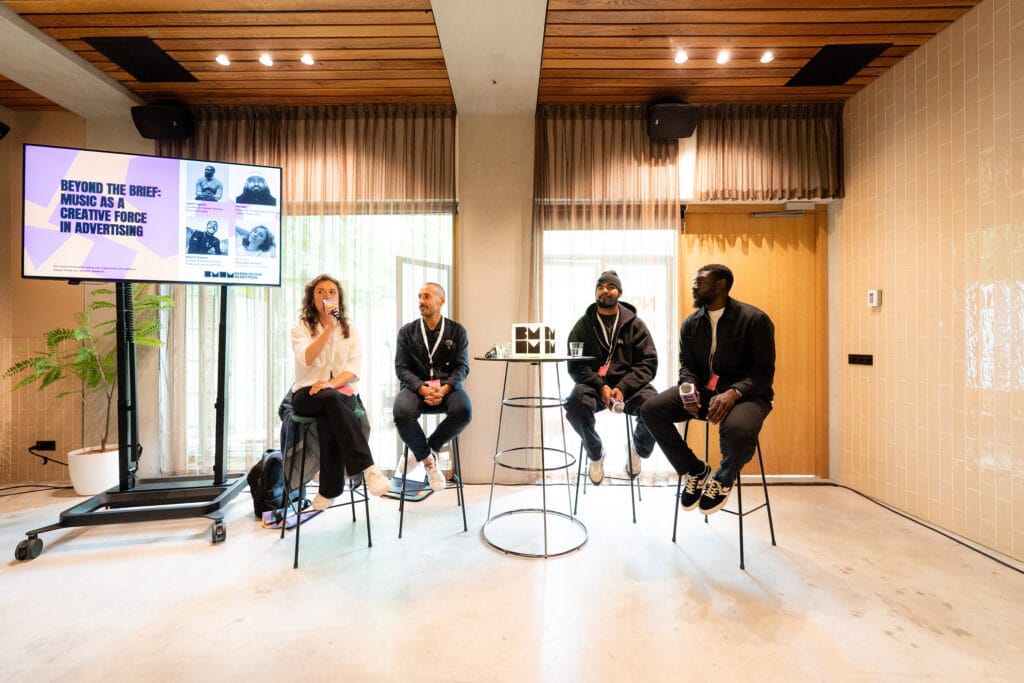
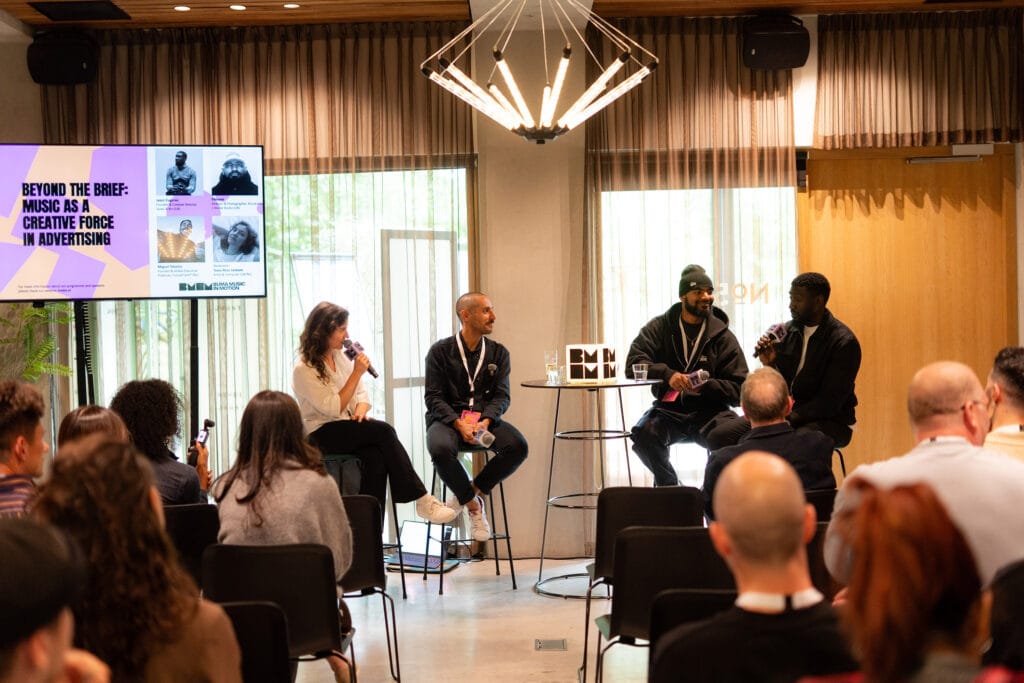
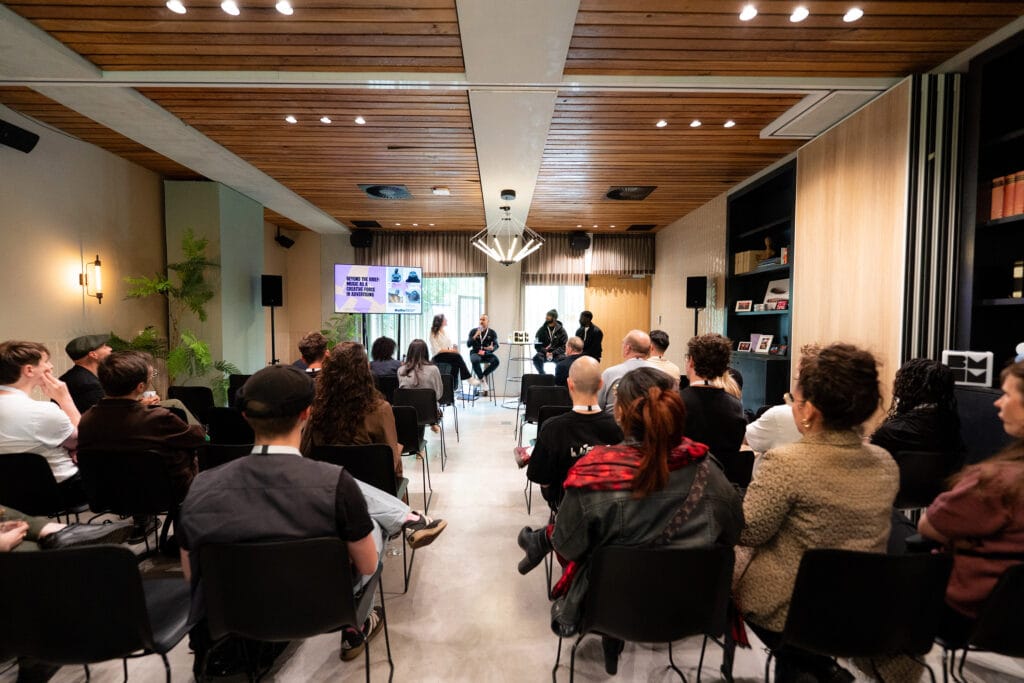
During Beyond the Brief: Music as a Creative Force in Advertising, it became clear what happens when that order is reversed. Led by moderator Tessa Rose Jackson, Jazon Eugenio from the London-based creative music house Quasi & Kin, Filmawi, founder of creative studio aPGRM and a director and photographer signed to Knucklhead and Divine Studios, and producer Miguel Teixeira from FutureFrank® spoke about a simple but underexposed point: music works better when it is not brought in afterwards, but is allowed to lead and think along from the very beginning.
No shortcuts
Jazon Eugenio presents a case for Manors Golf, a clothing and lifestyle brand that wants to break open the traditional world of golf. Not a closed country club feeling, but a sport for anyone with enough love for the game. What was special about the production was that Quasi & Kin was involved straight away. “We came in on the process from the script,” Jazon begins. “We even got it before they shot anything.” That sounds like every music supervisor’s dream. Until the process does what creative processes do: change.
The original musical direction? “More down like the Tame Impala route,” says Jazon. “Something indie, something rock and roll.” But the final video, at the suggestion of the brand itself, became something completely different: classical music mixed with an Irish Jig. Miguel Teixeira described that from the production side. Everyone always says that music should be at the table earlier, but “that process is messy as f*ck.”
My job is to be a great translator.
Jazon mainly sees his role as making the translation and offering clarity. “My job is to be a great translator.” Not only between client and composer, but between idea, time, budget, taste and feasibility. If things do need to change? Do not immediately shut the door, but be honest about what is realistic: “The creative process can change. I think it’s about being transparent. Like: the thing you want to happen can work, but only under these circumstances.” It may have produced the most useful lesson of the afternoon: involving music early is certainly not a shortcut to, or guarantee of control.
Music determines the image
For Filmawi, music starts even earlier. Not in the edit, not on set, but while writing the story. For a film with Adidas athletes, he did not receive a fully developed concept from an agency, only a direction: it had to be about mentality and process. Filmawi built the idea from feeling. “When I write, I tend to listen to music from the start. For me, it is really about the mood and feeling.”
Music even determines visual choices. The film was made in black and white: not because that automatically looks stylish, but because colour distracts. “For me, it was all about showing the movement of these athletes. Not the outfits they be wearing, the Adidas logos or the colours.”
For me, it is really about the mood and feeling.
He followed a way of working that is almost similar to documentary. First he interviewed the athletes: what they said during the interviews then determined the way he captured them on screen. “Super 8, infrared, 16mm, digital, GoPro: it’s all real.” Not a filter afterwards, but the choice of material as part of the feeling.
That might be the essence of Beyond the Brief: music does not only illustrate and support what you see, but can actually determine and lead what you are going to see.
More than just a lullaby
During the panel, Miguel Teixeira shows a film for Better Time Stories, an initiative for Ukrainian children who have been separated from their parents because of the war. Through children’s books and an app, parents at the front could record a bedtime story. A personal project that clearly affects Miguel, as his girlfriend is Ukrainian herself.
The film was shot at the beginning of the war. The curfew you see was real. There was hardly any shooting time. “Missiles were flying overhead, there were explosions everywhere.” It was filmed in a real bunker, with real soldiers. A real nurse. The director, Anna Kopylova, stayed in Ukraine with her two children while her husband was at the front. “Just imagine the power of that.”
The music choice came during the edit. Miguel asked his Ukrainian girlfriend what felt logical. Her answer: a lullaby. A classic Ukrainian lullaby, in the public domain, sung by the Ukrainian wife of one of the editors. Miguel’s nieces sang backing vocals. Suddenly, the music was no longer a soundtrack, but family history, wartime experience and comfort all at once.
Shortest performance, longest aftermath
Then the switch to something light. Miguel talks about a never-aired commercial for one of the biggest water brands in the world. An elegant, funny campaign. “Advertising done well,” as he called it himself. Everything worked: concept, edit, music. Until the entire production got stuck on one sound. A burp.
“Believe it or not, we literally spent two weeks in the sound booth shaping this burp,” says Miguel. “Too masculine. Too feminine. Too dirty. Not dirty enough. Not enough comedy.” Eventually, there were 49 versions of one and the same burp. The biggest joke? The spot was ultimately cancelled by the new CMO, and the campaign was shelved. As a result, BMIM Conference got the world premiere of a campaign that had never seen the light of day.
Specialist or all-rounder?
During the Q&A, a practical question came up: should you present yourself as an advertising composer as a specialist, or as an all-rounder?
Of course composers in advertising need to be flexible, says Jazon. “That’s the name of the game with advertising.” But when he is searching, he is often looking for one specific strength: “I think it is very important to be clear about what you are good at. Not because the other things are less relevant or valuable, but your specialism really matters.”
Filmawi confirmed this from a director’s point of view. If he wants to build a world, he wants to be sure that a composer truly masters that world. Too much “I can do everything” can sometimes make it harder to stand out.
In the end, it is not about music
It sounds strange after an hour of talking about music, but the final lesson of the panel was about something else: building trust.
“Don’t underestimate the power of building relationships,” says Jazon. Miguel makes it concrete. Fewer newsletters, fewer corporate gifts, more real contact. A WhatsApp message. A beer. Someone who does not spam, but remains present. “That’s it, the human connection.”
That’s it, the human connection.
And perhaps that is why music in advertising so often goes wrong when it is brought in too late. Not because composers cannot make a good track. But because good music needs time to become part of the idea, of the people, of the conversation.
Beyond the Brief showed that music only truly works when it is not asked to apply the final emotional plaster. Music needs to be at the table earlier. Not to make the process smoother, but to make the work better.
Text: Arjan Ranjbar
Photos: Birgit Bijl